A storytelling puppet toy designed for elderly users through direct field research — built on interview insights about memory, nostalgia, and the need for cognitively gentle, physically supportive interaction.
How do you design an interaction rich enough to spark memory, but simple enough that an 80-year-old can own it without help?
THE QUESTION THIS PROJECT ANSWERS
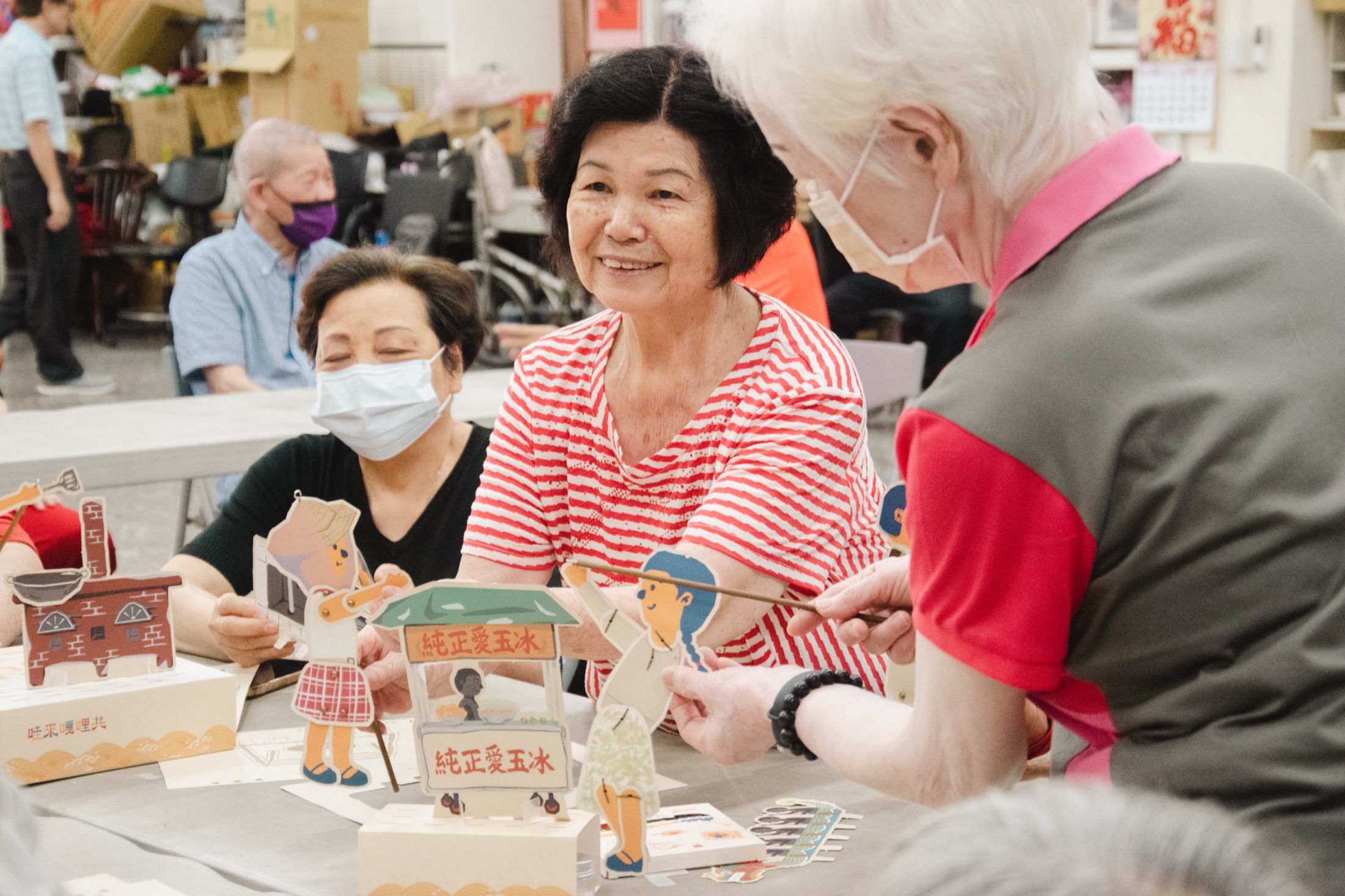
The clearest sign this design worked didn't come from a metric. It came when a 72-year-old participant recognised one of the pieces — a farming tool from her childhood — and, unprompted, began sharing the memory with everyone around the table.
"It has been a long time since I last saw this farming tool. When I was a child, it was my parents' production tool, and it became one of the toys of our childhood."
PARTICIPANT, 72 · CARE CENTRE TESTING SESSION
By the final round, 24 of 33 participants could assemble the puppet on their own — up from just 3 in the first session. The design got quieter and simpler; the stories got louder.
Stories to You is a puppet-based storytelling toy designed specifically for elderly users in care settings. It draws on reminiscence therapy — the practice of using nostalgic objects and narratives to support emotional wellbeing and memory recall in older adults.
The project was developed over 11 months (Jul 2023 – May 2024) through a full user-centered design process: interviews at daycare centres, iterative prototyping, and hands-on usability testing with senior participants.
Social Isolation in Elderly Care
Seniors in care settings often have limited access to meaningful, self-directed activities that foster connection with others or with their own memories.
Existing Activities Are Passive or Overly Complex
Most products for elderly users either require too little engagement or demand digital literacy and fine motor control that many seniors find challenging.
Over-reliance on Caregiver Assistance
Many therapeutic activities require ongoing caregiver involvement. Seniors lose the sense of agency and independence that makes an activity personally meaningful.
Design a tactile, self-directed activity that combines cognitive stimulation (storytelling and memory recall), physical exercise (fine motor engagement through puppet manipulation), and social connection — without requiring digital devices or caregiver mediation.
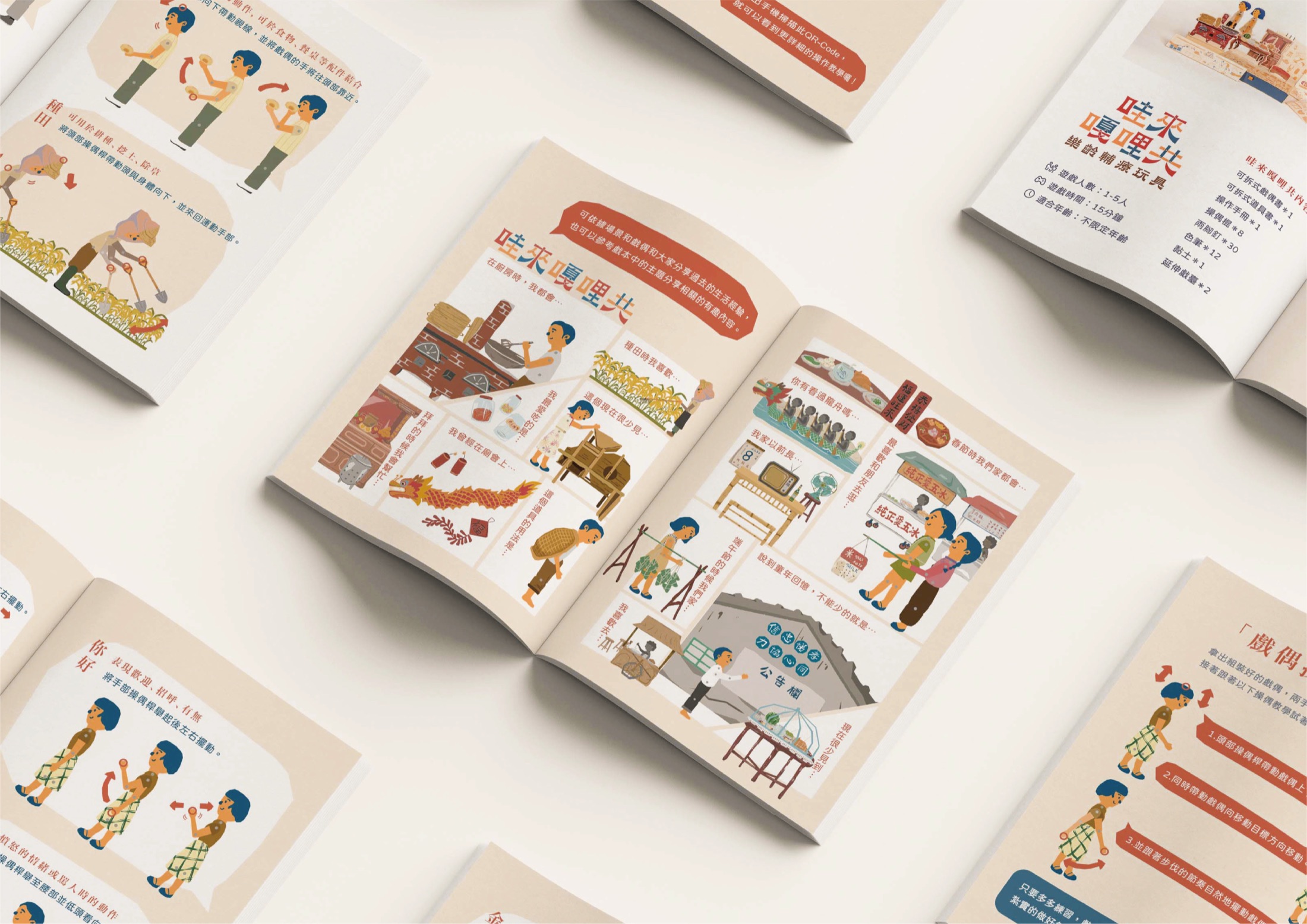
This was a four-person senior capstone project. Within the team, I led the user interview planning, ran the usability testing sessions at the care centre, and designed the graphical assembly manual that became one of the key iteration points of the product. I also contributed to the project's broader graphic design work and helped iterate the structural assembly design of the puppets and scene sets — refining how pieces connected and held together across multiple rounds of prototyping.
A tested physical prototype — lightweight hand puppets with simplified graphical assembly manuals — that sparked genuine storytelling engagement and emotional response during sessions at a local care centre. Across testing, independent assembly completion rose from 3 of 33 participants to 24 after the redesign. The project won the IDA Design Awards 2024 Silver in the Toys & Gaming category.
Research began in the field — not with assumptions about what elderly users needed, but with direct observation and interviews at daycare centres. The goal was to understand the actual texture of seniors' daily experience: what activities they gravitated toward, what frustrated them, and what sparked genuine engagement.
I conducted in-depth interviews with elderly participants at daycare centres, focusing on three core questions:
What activities do seniors find meaningful vs. frustrating?
Understanding the emotional register of their current activities — which ones felt purposeful, which felt passive or condescending.
How do seniors relate to memory and storytelling?
Exploring how narrative and reminiscence already appeared in their daily lives, and what objects or eras triggered strongest recall.
What physical constraints shape interaction?
Understanding grip strength, dexterity limitations, and comfort thresholds to inform material, size, and assembly complexity decisions.

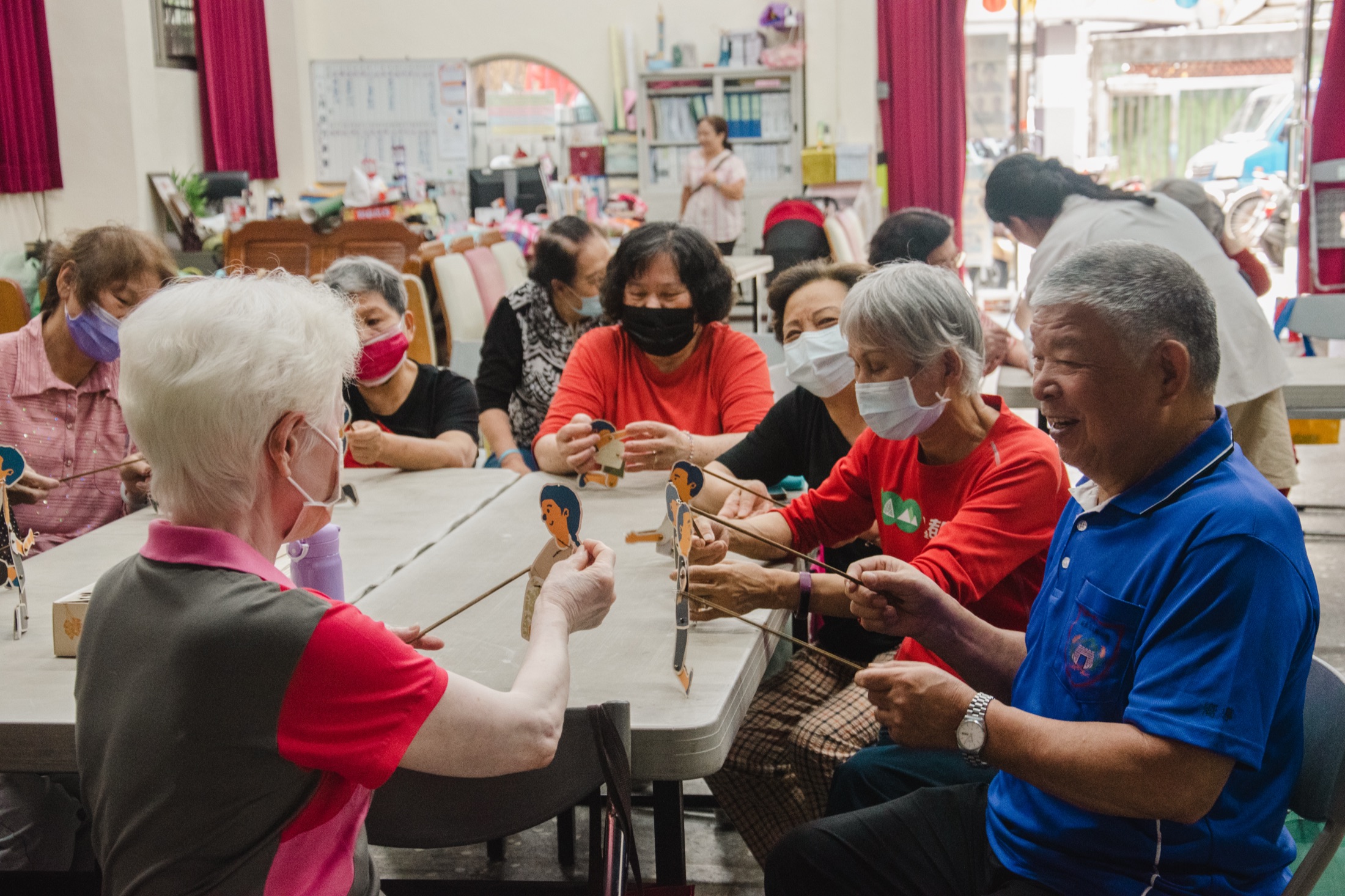
Field Observation · Co-design Workshop · 2023–2024
Nostalgic storytelling was the most engaging activity
Seniors consistently lit up when talking about the past. Activities connected to specific eras (1960s–1990s) triggered vivid memory recall and extended conversation.
Independence mattered deeply
Participants expressed frustration with activities that required caregiver setup or guidance at every step. Self-direction — doing something themselves — was a source of pride and satisfaction.
Assembly complexity was a key barrier
Multi-step instructions with text confused many participants. Clear visual guidance — images over words — was critical for independent use.
Physical engagement needed to be gentle but purposeful
Light puppet manipulation was both feasible and valued — participants enjoyed the tactile engagement as long as it didn't require sustained grip strength or precise fine motor control.
Social context amplified the experience
Storytelling with others — sharing, responding, laughing — was significantly more engaging than individual activity. Design needed to support group use.
— Activities in care settings tend to be passive (watching, listening) with little room for self-expression
— Products designed for seniors often feel clinical or patronising — they don't engage the person as an individual with history and identity
— Physical limitations are treated as the primary constraint, often at the cost of cognitive or emotional engagement
— Instruction formats assume literacy and visual acuity that many participants don't have
How might we design a physical activity that elderly users can set up and engage with independently — one that feels nostalgic and emotionally meaningful, supports gentle physical movement, and invites social storytelling without requiring a caregiver to facilitate?
Puppet theatre has a natural connection to the 1960s–1990s era that resonated with participants. A nostalgic, tactile toy — designed to be assembled and operated without help — could simultaneously serve reminiscence therapy, fine motor exercise, and social bonding goals. The key design challenge was making it simple enough to use independently while rich enough to spark genuine storytelling.
Field Research & Interviews
Visited daycare centres to conduct interviews and observe activity sessions. Identified storytelling and nostalgia as the strongest engagement triggers.
Concept Development
Explored tangible concepts that connected to nostalgic eras. Converged on hand puppets as the form factor — familiar, tactile, socially natural, and requiring no digital component.
Physical Prototyping
Built early prototypes to test size, weight, grip comfort, and assembly complexity. Each round surfaced specific friction points that informed the next iteration.
Iterative Testing at Care Centre
Tested prototypes with real participants at a local care centre. Observed assembly attempts, noted where users paused or asked for help, and recorded emotional reactions during storytelling.
Refinement & Final Design
Simplified assembly steps and redesigned instruction manuals to graphical-only format. Finalised proportions for lightweight handling and comfortable grip.
Assembly too complex
Initial prototype required 6+ steps. Participants frequently needed assistance. Feedback: reduce steps, make each connection type visually distinct.
Text-based manual failed
Participants didn't read instructions — they skipped to action. Redesigned the manual as image-only, step-by-step pictographs, and more participants completed assembly without help in the next round.
Weight and grip refined
Participants with reduced hand strength found earlier prototypes tiring for extended sessions. Final version reduced weight and adjusted grip diameter for sustained comfort.
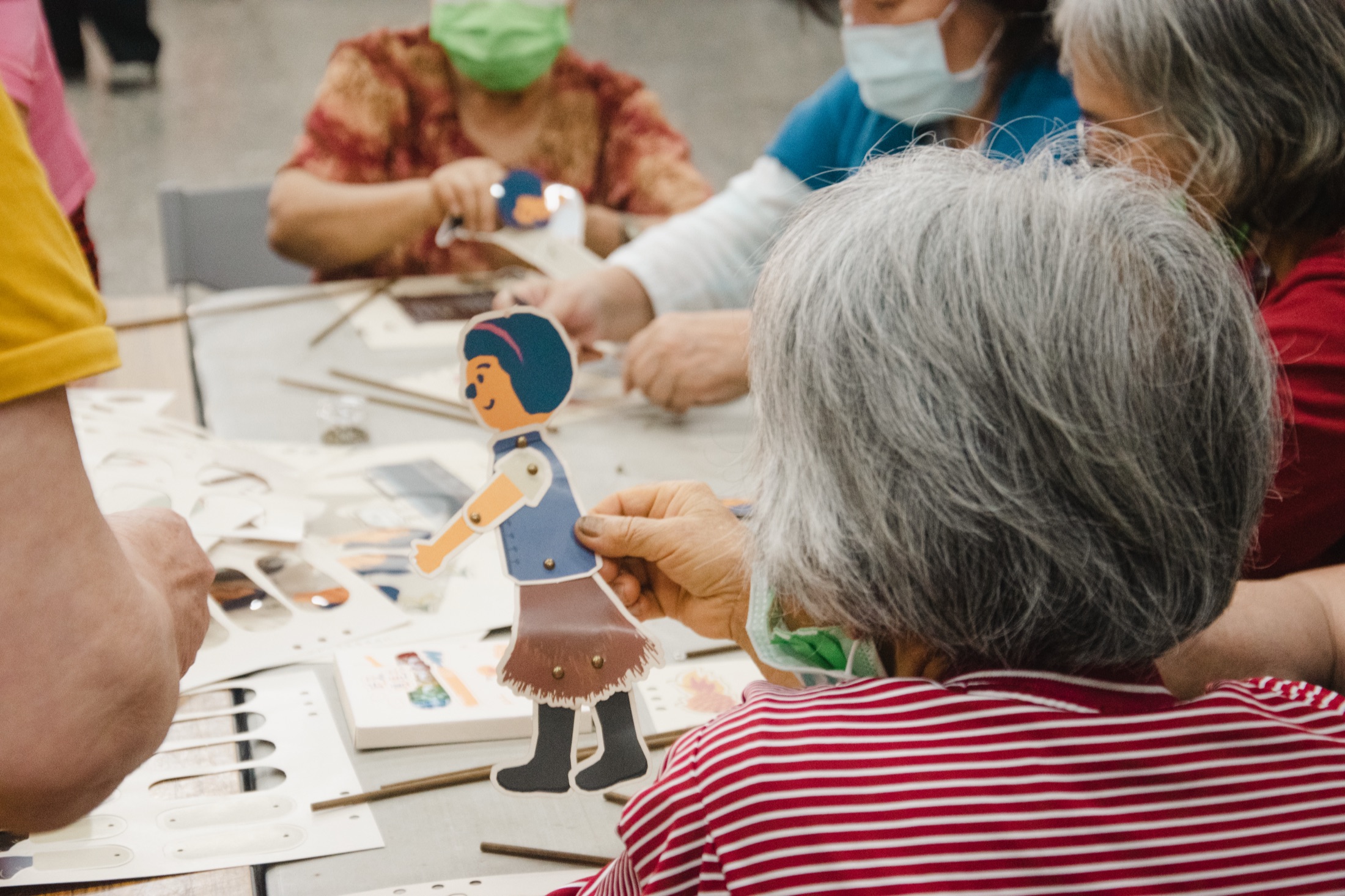
Stories to You is a hand puppet storytelling set with characters and scenarios drawn from everyday life in the 1960s–1990s — an era that resonated strongly with the target age group. Users assemble the puppets themselves using graphical manuals, then use them to tell, re-tell, or improvise stories, alone or with others.
The product requires no digital components, no caregiver facilitation, and no prior skill. Assembly itself is part of the interaction — a gentle warm-up for storytelling, and a moment of accomplishment before the session begins.
Nostalgic Characters & Scenarios
Puppets and settings reference familiar eras (1960s–1990s), triggering reminiscence and giving users a concrete starting point for storytelling without requiring improvisation from nothing.
Ergonomic Design
Lightweight, well-proportioned puppets designed for ease of handling — promotes comfort and supports hand strength development without demanding sustained grip effort.
Graphical Assembly Manuals
Simplified, image-only step-by-step guides that empower seniors to assemble puppets independently. No text instructions — pictographs only, validated through iterative user testing.
Designed for Group Use
Multiple puppets and roles support shared storytelling sessions — one user narrates, others respond, all contribute. Social interaction emerges naturally from the format.
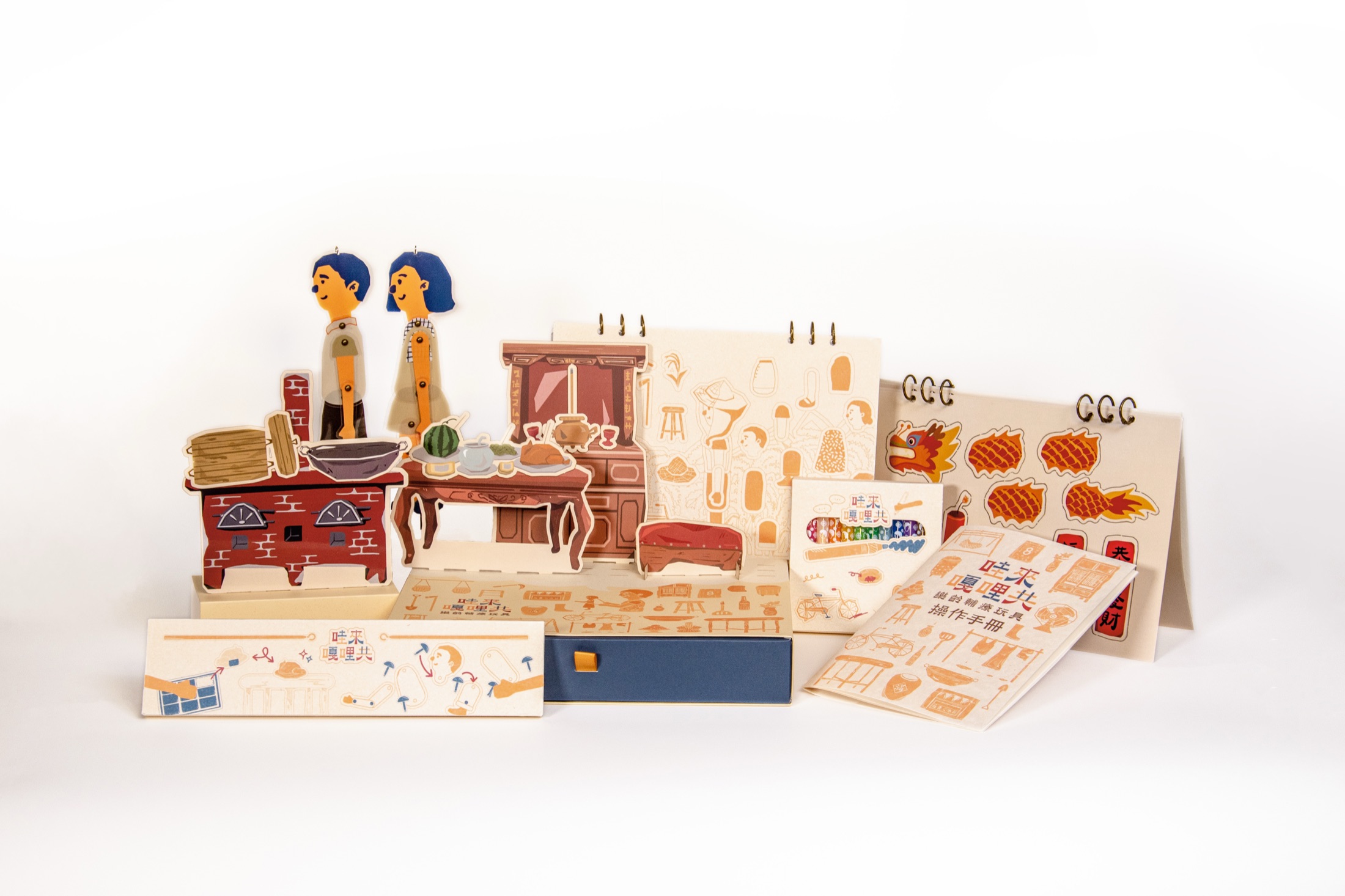
Final Product · Complete Kit Flatlay
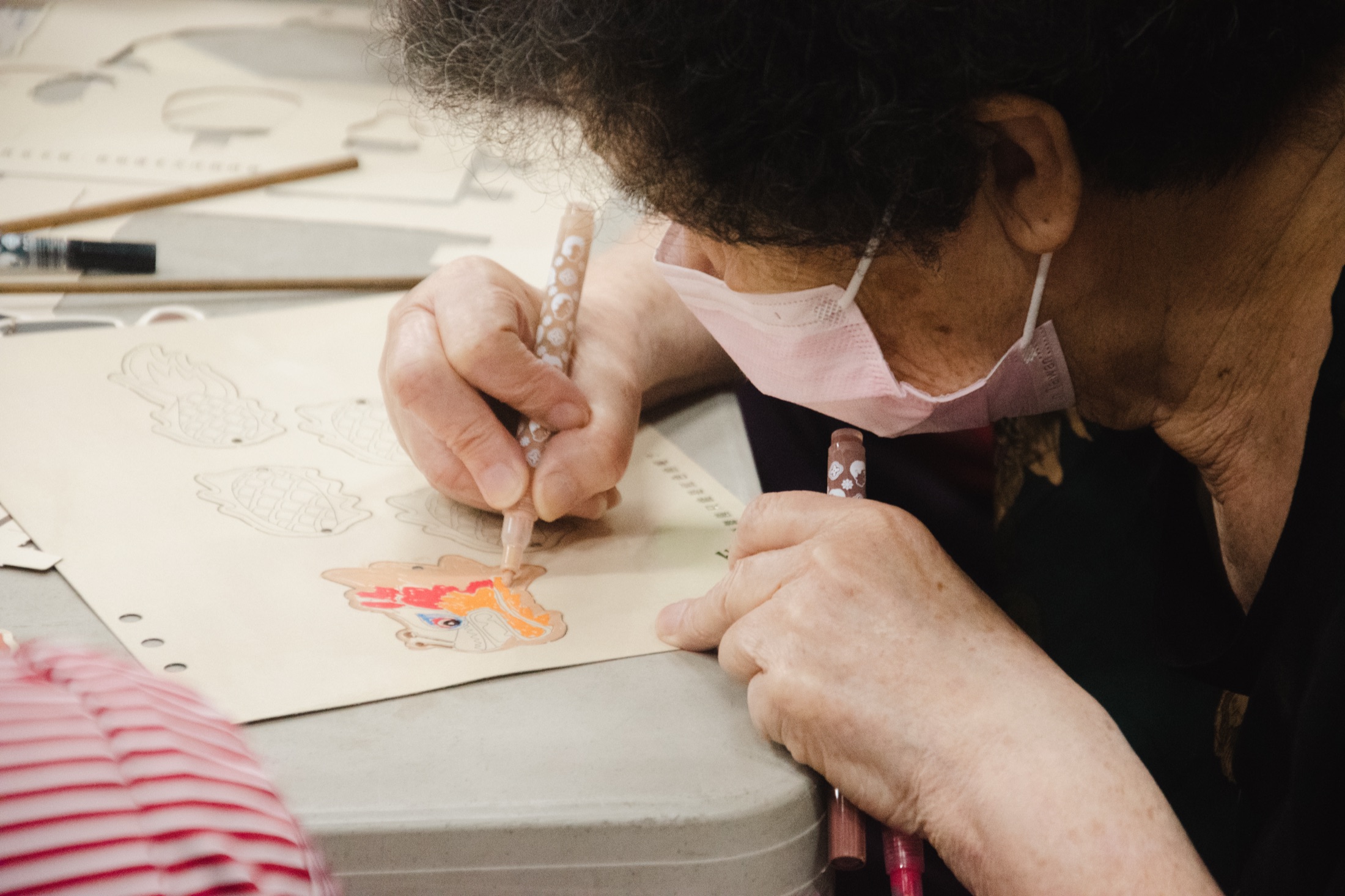
Testing was conducted at a local care centre with elderly participants across multiple rounds. Each session was observational — I watched assembly attempts without intervening, noted where users paused, asked for help, or succeeded independently, and recorded emotional responses during the storytelling phase.
Alongside behavioural observation, I tracked one hard measure — whether each participant completed assembly without help. Beyond that, I prioritised behavioural evidence: did they start telling stories? Did they smile, laugh, or engage with each other?
"Their smiles and heartfelt engagement reinforced that thoughtful design, even in its simplest forms, can create profound and meaningful connections."
— Field observation note, care centre testing sessionParticipants who completed assembly independently showed noticeably higher engagement in the storytelling phase — building the puppet themselves created a sense of ownership over the character. Sessions regularly extended beyond planned time as users continued sharing stories unprompted.
Assembly manual redesigned to image-only
Text instructions were removed entirely after Round 2 testing showed participants skipped or misread them. Pictograph-only guides raised independent completion from 3 participants to 24.
Puppet weight reduced
Heavier early prototypes fatigued participants during extended use. Final version minimises weight while maintaining structural integrity for repeated assembly.
Assembly steps simplified from 6+ to 3
Reduced the number of connection points so participants could complete assembly in one short sitting — maintaining momentum into the storytelling activity.
Tested with 33 senior participants across three testing rounds at a local daycare centre. After the assembly redesign, 24 participants completed the puppet independently — up from 3 in the first round.
“It has been a long time since I last saw this farming tool. When I was a child, it was my parents’ production tool, and it became one of the toys of our childhood.”
PARTICIPANT, 72 · CARE CENTRE TESTING SESSION
Cognitive & Emotional
Nostalgic scenarios sparked vivid memory recall. Participants revisited personal stories, connected past experiences to characters, and expressed emotional responses ranging from laughter to quiet reflection.
Physical & Social
Puppet assembly and manipulation provided gentle fine motor exercise. Group sessions created natural opportunities for conversation, turn-taking, and collaborative storytelling.
The project was awarded the IDA Design Awards 2024 Silver in the Toys & Gaming / Other Toy Designs category — recognising its alignment with genuine user needs and the quality of the user-centred design process.
The product is not yet ready for large-scale production. Key areas for future development:
— Formal usability testing with larger, more diverse participant groups across different care environments
— Materials that are both durable and easy to sanitise for care centre use
— Caregiver facilitation guide for users who do require some assistance
— Expanded character and scenario sets that reflect a wider range of cultural backgrounds
I'd involve participants earlier in the concept phase — not just testing physical prototypes, but co-designing the scenarios and characters with seniors directly. Some of the strongest storytelling moments came from participants remixing the given narratives; participatory design sessions could have surfaced that potential much earlier.
I'd also build in more structured ways to capture qualitative feedback during testing. My observations were rich but largely informal. Structured interview prompts after each session would have produced more comparable data across rounds.
This project demonstrates that good UX research doesn't require a screen. The same practices that inform digital product design — in-depth interviews, behavioural observation, iterative testing, synthesising findings into design decisions — apply equally to physical objects and tangible interaction.
More than anything, Stories to You showed me that design for vulnerable populations requires presence. You can't design for someone you haven't spent time with. The most important design decisions in this project came directly from watching real people — their hesitation, their delight, their independence.